
PVC Fence vs. Wood Fencing: Which Survives Ottawa's Harsh Climate?

If you’ve spent another weekend pressure-washing your fence, scraping peeling paint, or replacing rotted posts after a harsh Ottawa winter, you’ve likely started to wonder how long a wood fence can realistically hold up. For many homeowners in Kanata, Barrhaven, and Stittsville, this cycle repeats every spring.
This guide explains why PVC fencing is becoming an increasingly popular choice in Ottawa.
PVC vs. Wood Fencing Head-to-Head
Feature | PVC Fencing | Wood Fencing (Pressure-Treated) | Wood Fencing (Cedar) |
Typical Installed Cost (per linear foot)* | $70-85 | $70-85 | $85-100 |
Lifespan in Ottawa Climate | 30-50 years | 10-20 years | 15-30 years |
Freeze-Thaw Resistance | Excellent (doesn't absorb water) | Poor (absorbs moisture, splits) | Poor (absorbs moisture, splits) |
Maintenance Frequency | Rinse 1-2x/year | Stain every 2-3 years | Stain every 2-3 years |
Rot Resistance | Complete | Low | Moderate |
UV Resistance | Excellent (ASA-PVC) | Poor (requires treatment) | Poor (requires treatment) |
Warranty | Lifetime (quality brands) | None | None |
Post Replacement Needed | No | Yes (5-15 years) | Yes (10-20 years) |
Board Replacement Needed | No | Yes (5-15 years) | Yes (10-20 years) |
*Pricing based on typical Ottawa installations for yards over 100 linear feet. Actual price varies by length, style, and site conditions. Contact Fence Material Supply for a free estimate.
What Makes Ottawa's Climate So Demanding on Fencing?
The temperature swings are extreme. We go from -30°C in January to +35°C in July. That's a 65-degree range your fence has to handle every single year.
Freeze-thaw cycles are relentless. Ottawa gets 50-60 freeze-thaw cycles each winter. According to Environment Canada, we have 73 days below freezing annually, often with snow and ice accumulation that doesn't fully melt between cold snaps.
Ground frost goes deep. Ottawa's frost line extends 1.2 to 1.5 metres (4-5 feet) below the surface.
Here's what happens to wood in this climate:
Water gets into the wood grain (because wood is porous). When temperatures drop, that water freezes and expands. The wood fibres split and crack. When it thaws, more water gets in. The cycle repeats dozens of times each winter.
By spring, you've got rot setting in. Posts start to lean because frost heave pushes them out of position. Boards warp because the moisture content keeps changing.
This isn't a maintenance problem. It's a physics problem. And wood simply can't win.
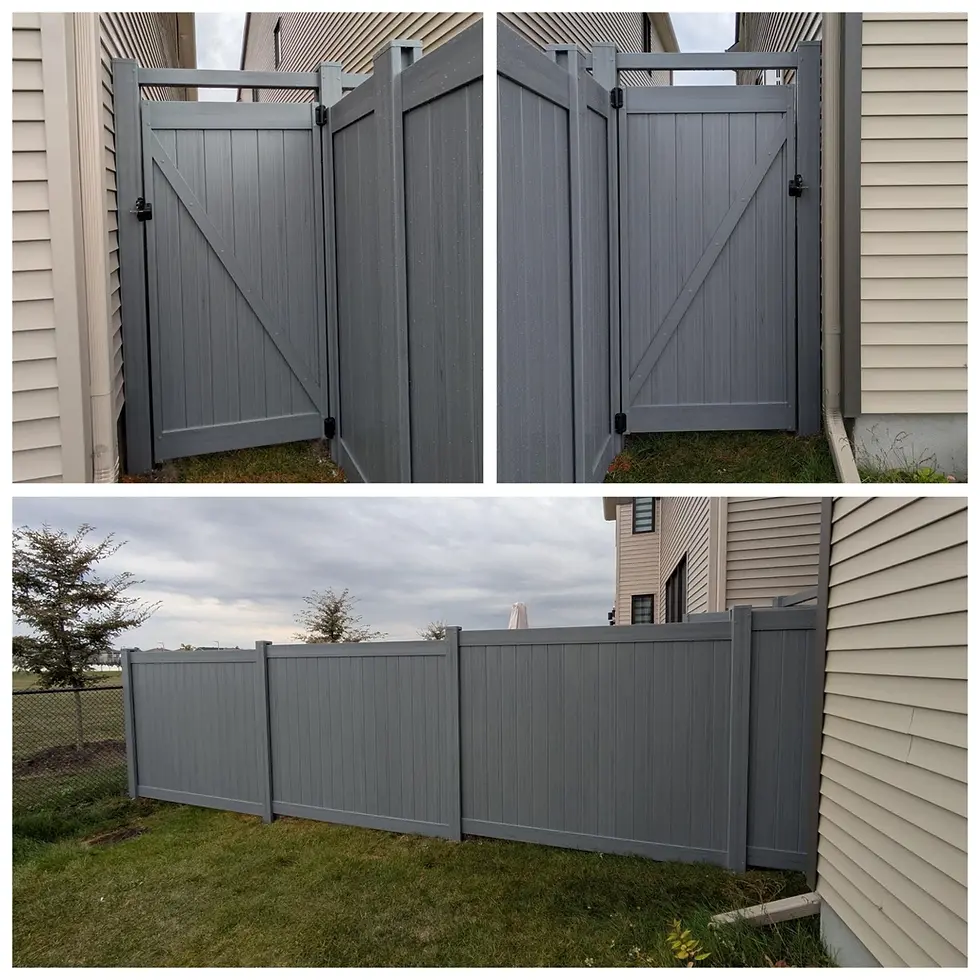
How PVC Fence Materials Respond to Extreme Cold
Unlike wood, which is a porous organic material that absorbs moisture, PVC (polyvinyl chloride) fencing is an engineered polymer that remains dimensionally stable through temperature extremes.
Here's what that means in practical terms:
Moisture Resistance: PVC doesn't absorb water. When snow accumulates against your fence, or spring melt creates standing water, PVC panels remain unaffected, while wood absorbs moisture, swells, and eventually rots.
Freeze-Thaw Immunity: Because PVC doesn't absorb water, freeze-thaw cycles can't cause the internal expansion that cracks and splits wood. A quality PVC fence looks identical after 10 Ottawa winters as it did on installation day.
UV Stability: Premium PVC fencing uses ASA-PVC formulations with advanced UV inhibitors. This prevents the chalking and colour fading that plagued early-generation vinyl fencing. In Ottawa's intense summer sun (particularly in south-facing yards), this UV protection is critical for long-term appearance.
The Detail Most Installers Miss:
PVC expands and contracts with temperature. When you go from -30°C to +30°C, materials move. Quality installers leave expansion gaps (about 6mm per 8-foot section) so your fence can breathe without buckling in summer or cracking in winter.
If your installer doesn't mention expansion gaps, they don't understand PVC installation. At Fence Material Supply, our certified installers are specifically trained on Ontario climate requirements, including proper expansion gap spacing for extreme temperature swings. Learn more about our professional installation services.
The Real Cost Comparison: Why Wood Costs More Over Time
When comparing PVC fence to wood, many homeowners assume PVC will cost significantly more upfront. In reality, at Fence Material Supply, installed PVC fencing starts at comparable pricing to a basic pressure-treated wood fence — typically $70–$85 per linear foot, depending on style and project size. For most yards over 100 feet, that’s $74.99 per linear foot.
So if the upfront price is essentially the same, why would you choose wood?
Wood Fence (Pressure-Treated):
• Initial installation: $10,500–12,750
• Annual staining/sealing (year 2+): $500–$800 every 2–3 years
• Post replacement (years 5–15): $500–$3,000
• Board replacement (ongoing): $200–$900 every 3–5 years
• Total 25-year cost: $18,000–$28,000
PVC Fence (Fence Material Supply):
• Initial installation: $10,500–$12,750
• Annual maintenance: Occasional washing with a garden hose
• Replacement costs: None (lifetime warranty)
• Total 25-year cost: $10,500–$12,750
PVC fencing starts at about the same installed price as pressure treated wood. The difference shows over time. Wood requires regular staining, repairs, and ongoing maintenance, which adds to the total cost over 25 years. PVC, on the other hand, requires virtually no upkeep. For busy homeowners like the Patel family in Riverside South, that means fewer weekends spent on maintenance and more time to enjoy their home.
Common Mistakes Ottawa Homeowners Make When Installing PVC Fencing
Even the best PVC fencing will fail if installed incorrectly in Ottawa's challenging conditions. Here are the critical errors to avoid:
Inadequate Post Depth: Posts must extend 1.07-1.22 metres (42-48 inches) below grade, with belled bottoms to prevent frost heave. Contractors who install at standard 0.76-metre (30-inch) depths will cause your fence to shift and lean within 2-3 winters.
Skipping Reinforcement: Quality PVC fencing includes aluminum reinforcement inserts within posts and rails. Without these, panels can bow under snow load or strong winds. Always verify that reinforcement is included, not optional.
Improper Hardware Selection: Ottawa's temperature extremes demand heavy-duty hardware. Nationwide Industries CH100N hinges, and Keystone X2 latches are designed for heavier weights and self-closing mechanisms that won't bind up in cold weather, critical for gates that see daily use.
Ignoring Thermal Expansion: Installers must leave proper expansion gaps between panels and use fasteners that allow for movement. Rigidly fixed PVC will buckle in summer heat or crack in winter cold.
Choosing Price Over Quality: Lower-grade vinyl uses recycled content that becomes brittle in Ottawa's winter cold. Premium PVC, like Titan brand, uses virgin ASA-PVC specifically formulated for Canadian climate conditions and carries a lifetime warranty.
Why Wood Still Has a Place (and When to Choose It)
PVC isn't always the answer. Here's when wood might be the right choice:
Heritage properties: Historic homes in the Glebe or Westboro may require wood to maintain period aesthetics or comply with heritage designations.
Short-term needs: Planning major landscaping changes in 5-7 years? Wood's lower upfront cost makes sense for temporary installation.
Custom designs: Intricate lattice work or unusual configurations are sometimes easier with wood than PVC's standardized panels.
For most Ottawa homeowners, however, these scenarios represent edge cases. The vast majority of residential fencing applications favour PVC's maintenance-free performance.

Making the Right Choice for Your Ottawa Property
The decision between PVC fence and wood ultimately depends on your priorities. If you're Doug in Kanata, tired of spending weekends staining a fence that still looks weathered by May, PVC offers a "never again" solution. If you're the Patels in Riverside South with young children and a golden retriever, the lifetime warranty and zero maintenance align with busy professional lives.
Here's how to evaluate your specific situation:
Choose PVC fencing if you:
Plan to stay in your home for 10+ years
Want to eliminate annual maintenance tasks
Live in a new development (Barrhaven, Findlay Creek, Orleans) with modern aesthetics
Have experienced fence failures from frost heave or moisture damage
Value long-term cost savings and reclaiming your weekends
Choose wood fencing if you:
Need temporary fencing (under 5 years)
Have heritage property requirements
Prefer the natural aesthetic and are committed to maintenance
Require highly custom designs
For Contractors:
PVC offers specific advantages in the Ottawa market:
Contractor pricing protects margins
Lifetime warranties reduce callback risk
Growing consumer awareness makes sales easier
13 colour options (7 PVC + 6 WPC) complement modern landscapes
Landscaping contractors particularly appreciate how PVC fencing integrates with contemporary outdoor living spaces without the maintenance coordination headaches of wood.
Learn more about Fence Material Supply's contractor pricing and wholesale programs.
Frequently Asked Questions About PVC Fencing in Ottawa
Does PVC fencing crack in extreme cold?
No, quality PVC doesn't crack in Ottawa winters.
Premium products like Titan PVC use ASA-PVC formulations that stay flexible down to -40°C. The key is material quality—virgin ASA-PVC versus cheap recycled vinyl.
Lower-grade vinyl may become brittle. Always check the manufacturer's cold-weather rating and warranty.
How long does PVC fencing actually last in Ottawa?
30-50 years with proper installation.
Wood rots, warps, and absorbs moisture. PVC doesn't have those problems. Most premium manufacturers offer lifetime warranties on the product itself (installation warranties typically run 5 years).
The critical factor: posts must go 42-48 inches deep.
Can I install PVC fencing myself?
You can, but it's risky without experience.
PVC in Ottawa requires specific knowledge about frost depth, expansion gaps, and reinforcement. Get it wrong, and you'll have heaving or buckling regardless of material quality.
Professional installation from Fense Material Supply ensures code compliance and warranty protection. If you're experienced or a contractor, a material-only purchase is available.
What maintenance does PVC fencing require?
Rinse it with the garden hose once or twice a year.
For stubborn stains or mildew in shaded areas, use water and mild detergent with a soft brush. That's it.
No staining. No painting. No sealing. No chemical treatments.
Avoid pressure washers closer than 30cm; high pressure can damage the finish.
Is PVC fencing more expensive than wood?
No, at FMS, the installed price of PVC fencing is comparable to a standard pressure-treated wood fence, typically in the same $70–$85 per linear foot range. Where wood pulls ahead in cost is everything that comes after installation: staining every 2–3 years, board replacement every 5-15 years, and post replacement after 5–15 years. PVC avoids all of those costs, making it the more economical choice over time.
Will PVC fencing fade or discolour over time?
Modern PVC won't fade as old vinyl did.
ASA-PVC formulations include UV inhibitors that prevent chalking and colour change. Quality products maintain colour for 25+ years, even on south-facing fences in full sun.
Want proof? Ask to see installations.
Can PVC fencing withstand Ottawa's heavy snow loads?
Yes, with proper reinforcement.
Quality PVC systems include aluminum inserts in posts and rails. These handle snow accumulation and wind loads that would collapse unreinforced panels.
Always verify reinforcement is included—not sold as an optional upgrade.
What colours are available in PVC fencing?
Way more than just white.
Common PVC colours include Light Grey, Westport, Dark Grey, Moonlit, Teak, and Adobe. Hybrid systems add contemporary options with black aluminum framing.
You've got 13 colour options total (7 PVC + 6 WPC).
Darker colours may show thermal expansion slightly more, but proper installation accounts for this.
Do I need a permit to install a fence in Ottawa?
No, Ottawa does not require a permit for standard residential fencing.
Pool fencing does have specific requirements under Ottawa's Pool Enclosure By-law.
Before installation:
Verify property lines (get a survey certificate)
Check homeowners' association rules
Confirm compliance with the City of Ottawa Fencing By-law
Can PVC fencing be recycled at the end of its life?
Yes, PVC is recyclable.
Given that quality PVC lasts 30-50 years, recycling is a distant consideration. But PVC is a thermoplastic that can be melted down and reformed.
The environmental question usually centres on manufacturing impact versus wood's renewable nature, balanced against eliminating all the chemical treatments (stains, sealers) wood requires.
Taking the Next Step
Ottawa's climate demands fencing that can withstand extreme temperature swings, relentless freeze-thaw cycles, and significant moisture exposure. While wood fencing remains viable for specific applications, PVC fencing eliminates the primary failure mechanisms that plague traditional materials in our harsh conditions.
With comparable upfront pricing to pressure-treated wood, zero maintenance requirements, and a lifetime warranty, PVC fencing is the clear choice for most Ottawa homeowners. When properly installed with adequate post depth, thermal expansion gaps, and quality reinforcement, a PVC fence will outlast two or three wood fence replacements, while requiring nothing more than an occasional rinse.
Ready to explore maintenance-free fencing for your Ottawa property? Contact Fence Material Supply for a free in-person estimate and site assessment. Our team understands Ottawa's unique climate challenges and can recommend the right PVC fencing solution—whether you're in Stittsville, Kanata, Barrhaven, or anywhere across the region. Visit fencematerialsupply.ca or use our online fence estimate tool to get started today.
About the Author: This guide was developed based on 30+ years of combined experience installing and supplying fencing materials across the Ottawa region, with specific expertise in climate-appropriate installation techniques for Ontario's demanding conditions.


